


Transcript
Introduction [00:00]
Most of this podcast is a recording from a retreat Charlie Awbery and I led a month ago. I’m adding a short introduction here now, to provide background context, so you can understand more of what we presented then.
So first, tantra is the branch of Buddhism concerned with energy, and therefore with action. Energy is the potential for action. You can’t have either without the other. Tantra is still sometimes misunderstood as being all about sex. There’s a lot of energy and action in sex, so tantra can work with that. But there’s energy and action in everything we do, so tantra can work with everything in our lives.
In all Buddhisms, one acts for the benefit of others. However, most just help you develop good intentions. Tantra calls the bluff on that. Without energy, intentions are flaccid piety. Tantra says, “Okay, that’s nice. What are you actually going to do for other people and how?” And it has answers.
There are many different styles of beneficent activity. Tantra personifies them as yidams, who are mythic people, rather like gods, who represent particular kinds of energy. This retreat was sponsored by Evolving Ground, a contemporary Vajrayana Buddhist community we abbreviate as eG. eG teaches several different yidams, and therefore several different styles of benevolent energy, and beneficent activity. We wrote a post about that two weeks ago, titled “Yidam: extraordinary relational possibilities.” You might want to check it out for more background explanation.
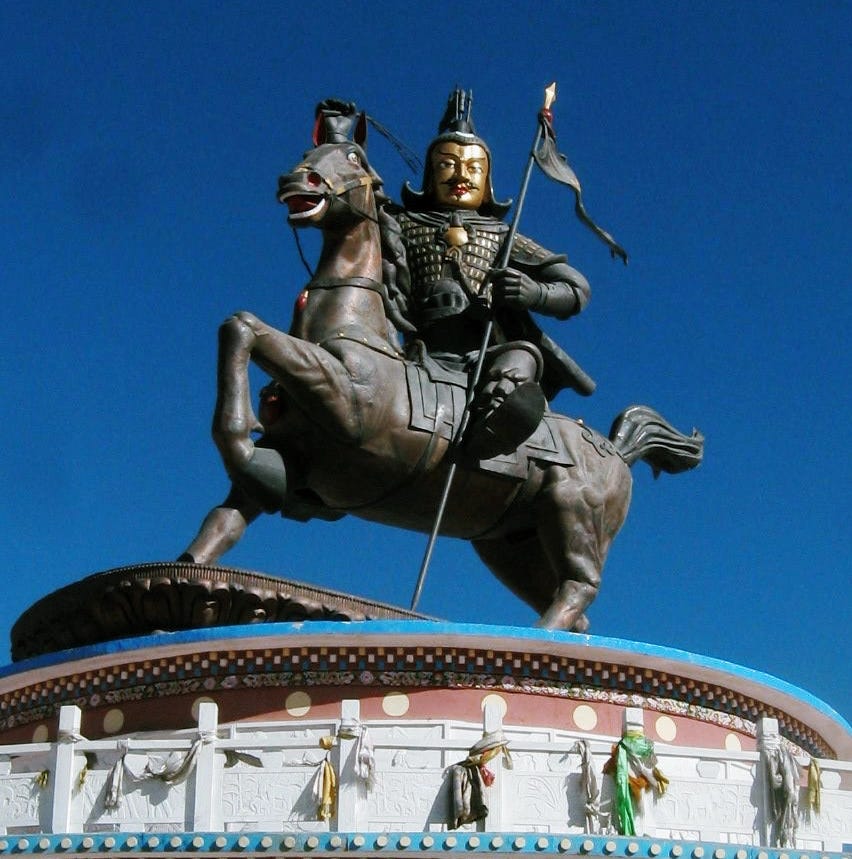
One style of beneficence is nobility: the wise, creative, and just use of power. In eG, we take the yidam Gesar as inspiration for noble activity. Gesar is the mythic warrior-king-sorcerer-god-hero of a vast Tibetan epic. We practice Gesar with a text, called a sadhana. A sadhana is the manual for a structured meditation ritual, which you can practice individually or in a group. Part of the ritual is reading the text out loud, and then doing the things it describes.
The Evolving Ground sadhana is titled Good King Gesar. It’s written in flowery pseudo-poetic language, as is traditional. In the retreat recording that follows, I explained particular bits of the text; and quoted it in places.
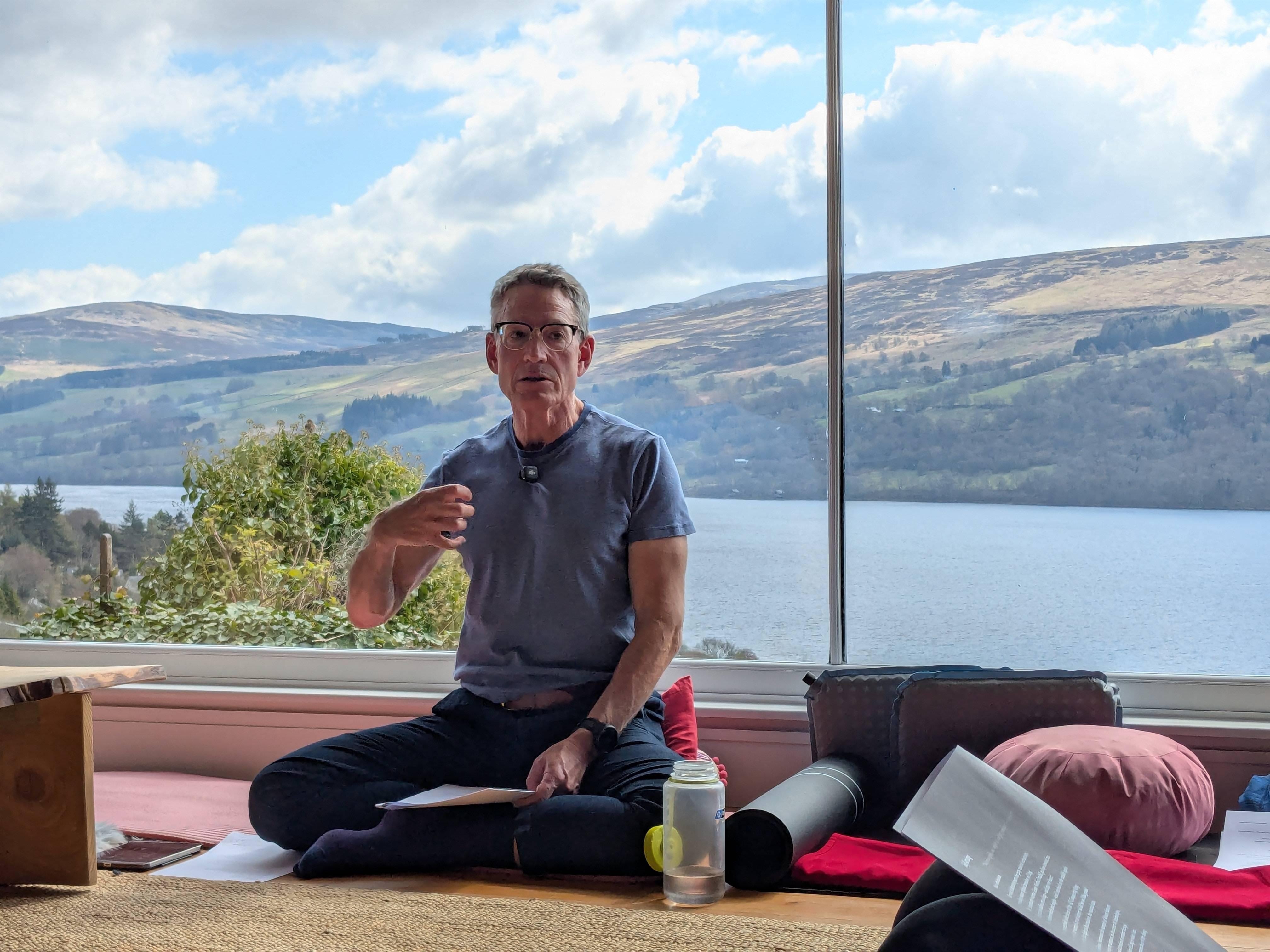
Gesar was the king of a place called Ling. Our retreat was held in a gorgeous remote mountain valley in Scotland. As you will hear, that is also Ling.
One last thing: the transcript of this podcast on Substack includes numerous hyperlinks to explanations of uncommon concepts. If you are confused by missing background, or want to learn more about some point, you could follow those. Also, the transcript has numerous illustrations which can help visualize what we are talking about.
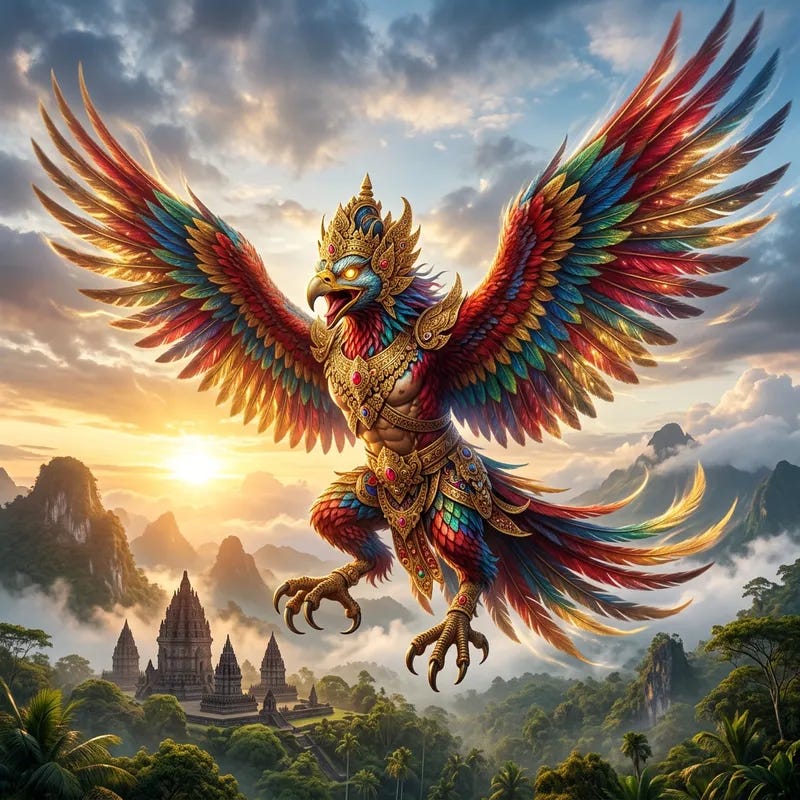
And so now… let’s catch a ride to Ling on the back of the garuda of outrageousness!
The actual world is the mandala of the deity [04:04]
One of the things about this sadhana that is unusual is that it is emphasizing the actual world as the mandala of the deity. Mandala is the Sanskrit word for kingdom. It literally means circle, but it means kingdom.
There is the visionary world, and there’s the actual world; and these are both real, in some sense. Tantra forms the connection between the visionary realm and the actual world. You become the connection between these two. You can think of the central channel as a conduit that connects the energy of the actual world and the energy of the visionary realm, and they flow through you.
You can get lost in the visionary realm. I recommend avoiding becoming a spiritual person, because this means being lost in the visionary realm, and trying to un-see the actual world as much as possible. And this makes you ineffective! Because if you’re going to act in the actual world, for the benefit of other people, you need to have a accurate vision of what is going on, and how it works.
On the other hand, if you are stuck in the actual world and you are trying to un-see the visionary world, then you’re caught in a kind of mundane materialism that lacks vision; that is not directed toward some… better future? That’s actually putting it in a bit of a materialistic point of view, but: some kind of pure vision of what is possible. I think “possibility” is the right word for this.
So, a lot of Tibetan material… they were isolated in monasteries, and they got lost in the visionary realm a lot of the time.
The Gesar material is, I think, an attempt to make this connection of the actual world of a very difficult political situation, at a particular time, at a particular place in Tibet, where action needed to be taken: for the benefit of people who were caught up in civil wars and religious strife. There needed to be a connection made between that mundane, difficult situation and a vision of what was possible instead. And the possibility was: a Good King.
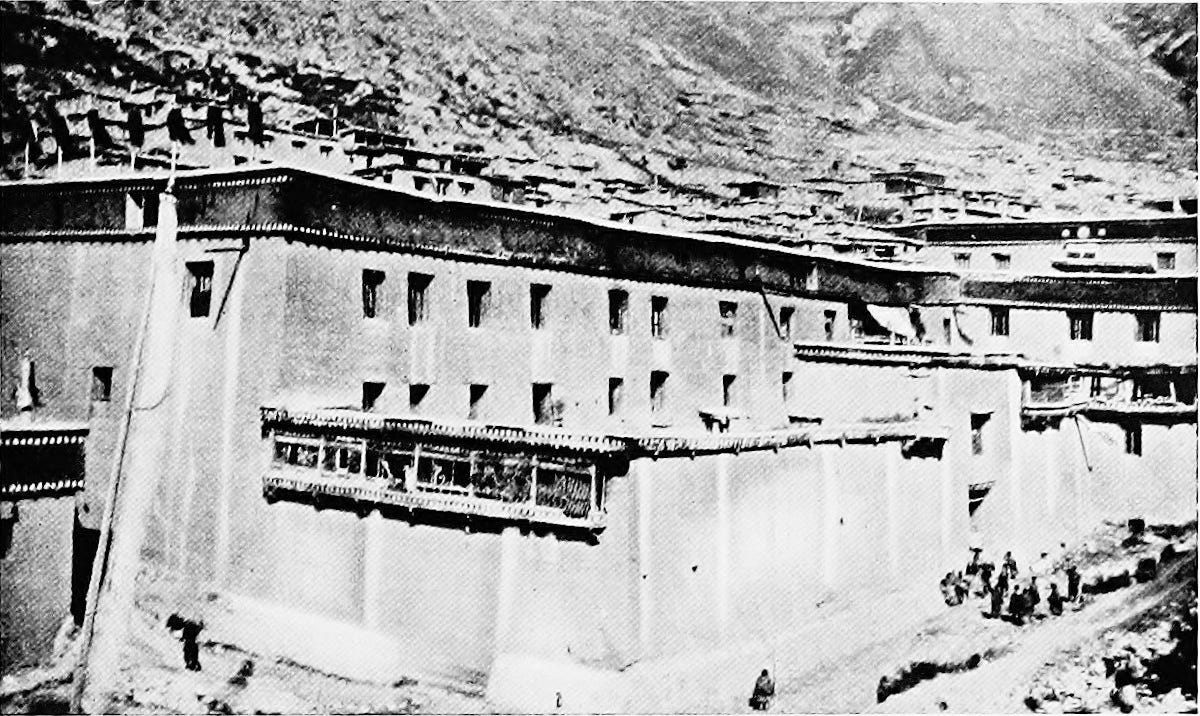
Mipham, who did a lot of this work, was an advisor to the king at the time. And he wrote a book called The Just King, which is a book of advice to the Crown Prince of Derge, which was a major kingdom in the area; who did become king.
This is a form-oriented sadhana. It’s an action-oriented sadhana. And I think it’s why Mipham did what he did, which we’re reworking here. It’s that action was required, form was required, at that time. And Tibetan Buddhism had kind of gone off into fairyland, and he was trying to pull it back down to concrete form; reality.
The cavortings of awareness unleashed [07:34]
So all of this stuff is:
the cavortings of awareness unleashed.1
And partly that’s to emphasize the fact that we’re speaking in the visionary realm here, and you don’t want to concretize this as something that’s actually existent in some sense. But also, there is the practice in tantra of seeing everything as illusory in some sense. And this is bringing the visionary realm and the actual realm into correspondence. And when you do that, things you see in the actual realm take on a visionary quality, and become somewhat unreal and transparent and shape-shifting. And that can become psychotic, if you’re not maintaining also the connection with the concrete specifics of how stuff actually works. This is the trick of tantra: making that connection without losing yourself in either realm. And being able to superimpose them, to employ the logic of vision and the logic of actuality as appropriate; simultaneously, ideally. So, “cavortings of awareness unleashed” is this sense of sacredness, and slightly unreal quality.
Jan: I have a question about “cavortings.” I checked it in the dictionary and it means, like, “play” basically?
David: Yeah, energetic, bouncing around kind of play.
Jan: What was the “leash” then?
David: Um, unleashed from mundanity. From being lost in ordinariness. When you’re leashed to ordinariness, you can’t see sacredness. You can’t see the electric qualities of actual things.
Ideologies are demonic attempts to escape from actuality into some vision [09:38]
David: The section “Displaying confidence in actuality,” I said last time: this is in the place of the refuge. “Taking refuge” is displaying confidence in actuality. That’s this sense of, “Okay, I’m actually in this actual-world situation. And that is what I’m confident of.”
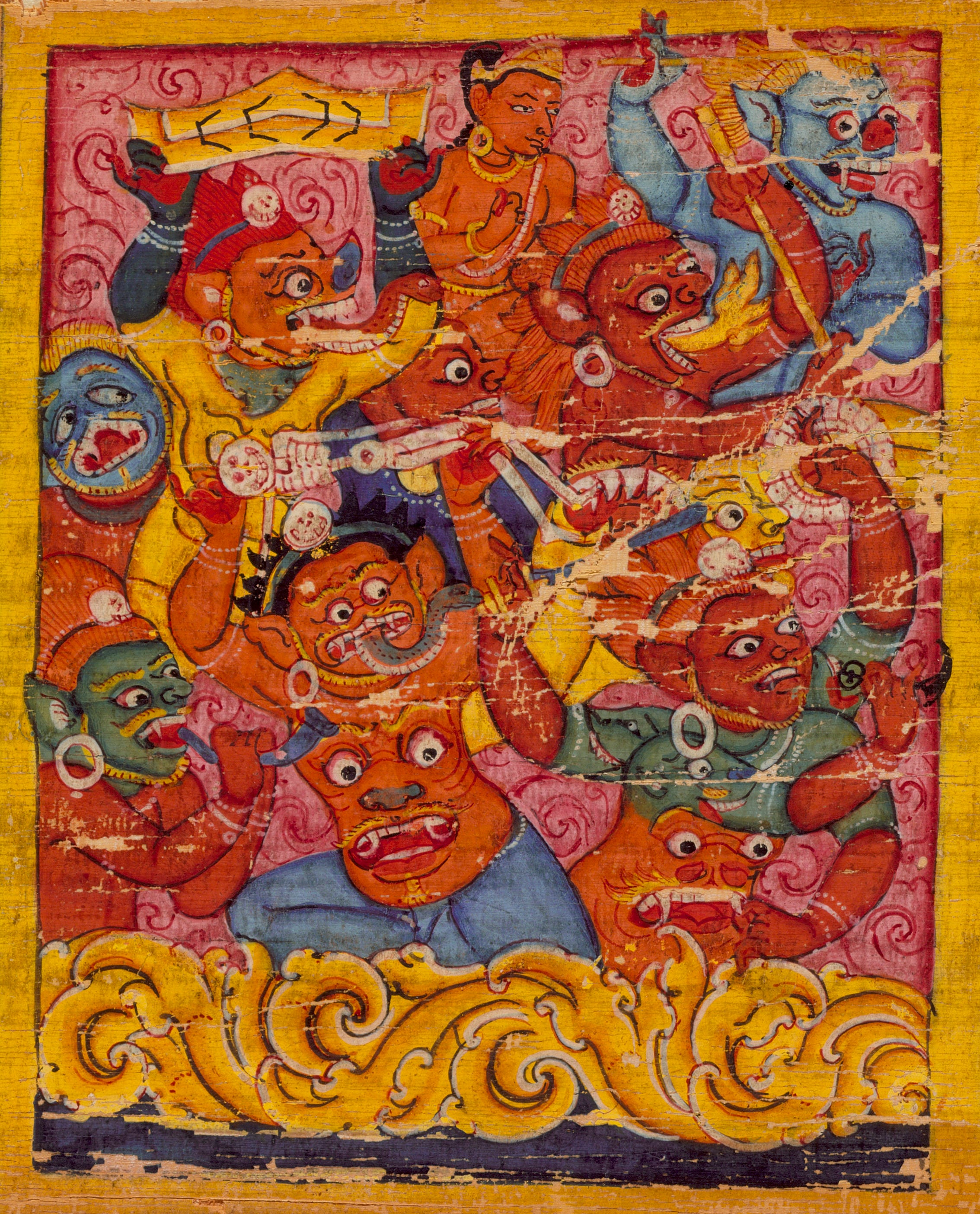
Mara showing a mystic vision of perfection
is the failure mode of trying to escape into the visionary realm. The actual world is the charnel ground. It’s civil war, in that case.
Do ask questions!
Splendid! Yes?
Sasha Vezhnevets: Um, when I yesterday was going through it, I also had another way of interpreting the “vision of perfection”?
David: Mm-hmm?
Sasha: As kind of: an ideology, not necessarily related to mysticism or religion, but any sort of ideology that imagines perfection?
David: Yeah.
Sasha: I mean, for me, the “mysticism” would be communism; something like that. That’s what was more familiar growing up, but there’s no lack of other ones. So what you think of that interpretation?
David: Yes.
Sasha: And monastics, we can have academics, and that choice—
Steph: Or any rule-based system, or any framework, if you take it as the main, or the only, framework.
David: Yeah, thank you. That’s exactly right. There’s a section in here about Gesar… Let’s see…
Your horse-hooves trample the compulsions of demonic egregores!
Your werma-arrows riddle the promises of delusional enthusiasms!
Your prajña-sword eviscerates the certainties of fixed ideologies!
This is addressed at exactly that.
Dzogchen has a meta-systematic view of Buddhism [11:20]
David: This is kind of eG-specific. It’s the meta-systematic view that any fixed system is actually demonic, and needs to be slaughtered. Once you’ve chopped the head off the demon, you can raise it from the dead and have it serve you. This is a very traditional role for Tibetan sorcerers, to subjugate demons and force them to serve the dharma.
My work on meta-rationality, and other things that I’ve written, are relevant here, and being echoed in the sadhana. Dzogchen, uniquely in Buddhism, is meta-systematic; and says, “Here are all these different Buddhist systems; and here’s how they’re useful, under what circumstances, for what purposes do you apply this Buddhist system; and here’s how it’s limited, and actually not a full story, not actually correct.”
I think that’s part of the attraction of Dzogchen, for me and for Charlie and for others: that sense of “No fixed system; but systems are actually very valuable.” And we’re practicing a particular system in doing this; but there’s nothing sacred about this sadhana; or fixed as “this is the thing to do.” It’s a thing that has a particular function.
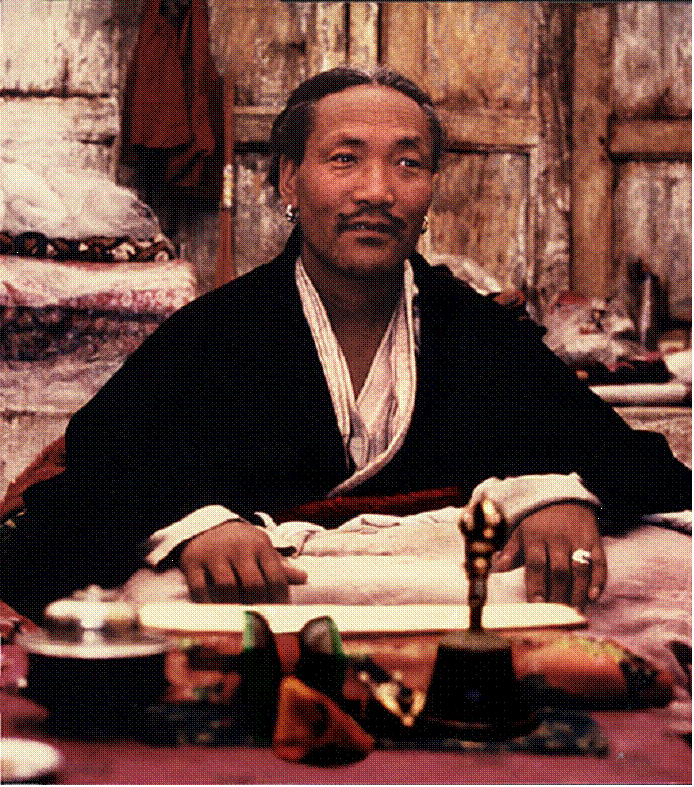
We got this partly from Ngak’chang Rinpoche, who got it from Kunzang Dorje Rinpoche. I don’t know where Kunzang Dorje Rinpoche got it. I mean, he got it from the Kunjé Gyalpo, I suppose. Or his teachers.
Victory over aggression [12:59]
David: I’m just gonna go through this and babble, but please ask questions. That was a very illuminating question; thank you, Sasha!
I act for the benefit of friend and foe alike.
That’s central for the Gesar mythos: that a warrior is willing and able to kill, when that is absolutely necessary; but does so without anger, and without aggression, but simply out of a sense of “this has to be done.” “I wish it didn’t have to be done, but I’m now going to kill you because that’s what has to be done.”
I find, to be more concrete about it, that when I’m in conflict with somebody… I mean, this sounds nice and, and I’m not nice, and I don’t really advocate niceness as such. But, looking for both how can I benefit the person, but also how can I actually take their side in a conflict, is really helpful. It doesn’t guarantee a good outcome. It doesn’t guarantee that either of us will wind up happy in the end, but by and large, it improves the interpersonal situation.
Adult stage theory and Buddhist tantra [14:18]
David: There’s several bits of eG-specific language in here. One is:
Lead me into the autonomy of self-authorship,
And my distinctive manifestation of nobility as self-possibility.
These are eG terms, partly taken over from adult stage theory, which has worked its way into a tantric sadhana!
Charlie: They’re directly relevant to the eG path, the ninefold path, as well. “Self-possibility” is the sixth in that set, and “personal autonomy” is the third; and those two are directly related, vertically. So, personal autonomy is the form aspect of the base; self-possibility is the form aspect of the path; and then powerfulness is the form aspect of the result, in that eG nine way.
Ling is in Scotland and Colorado, and distills the nectar of the gods [15:14]
David: In terms of this emphasis on the actual world in this sadhana, this is Ling. This is a magnificent place. Thank you for bringing us here, Steph! But you can see here the:
grassy plains replete with iris and columbine.
Apostol: Are there, like, esoteric wrinkles there?
David: Yeah, everything in here is covered in esoteric wrinkles!
Apostol: So why those?
David: Why the iris and columbine? That’s esoteric in the sense that it’s coming out of personal experience of particularly sacred places in mountains. The iris is a reference to a sacred place in the Sierra Nevada, where Charlie and I lived for a decade. The columbine is the State Flower of Colorado. They’re spectacular blue flowers.
Um, so… Where is it? Um, skipping ahead a few pages:
The wind of attention parts the gray mist of nebulosity,
Revealing a sunny upland meadow of Ling.
There is a principle in tantra, that everything is everything else. No! Sorry! Everything is something else. There are monist religions in which everything is everything else, everything is actually the same as everything. Tantra is highly specific. It’s really interested in the complexity of details. And so: menstrual blood is emptiness. These are the same thing, and they’re also the sun; and so on and so forth. There are these systems of correspondences, where each thing is a series of other things.
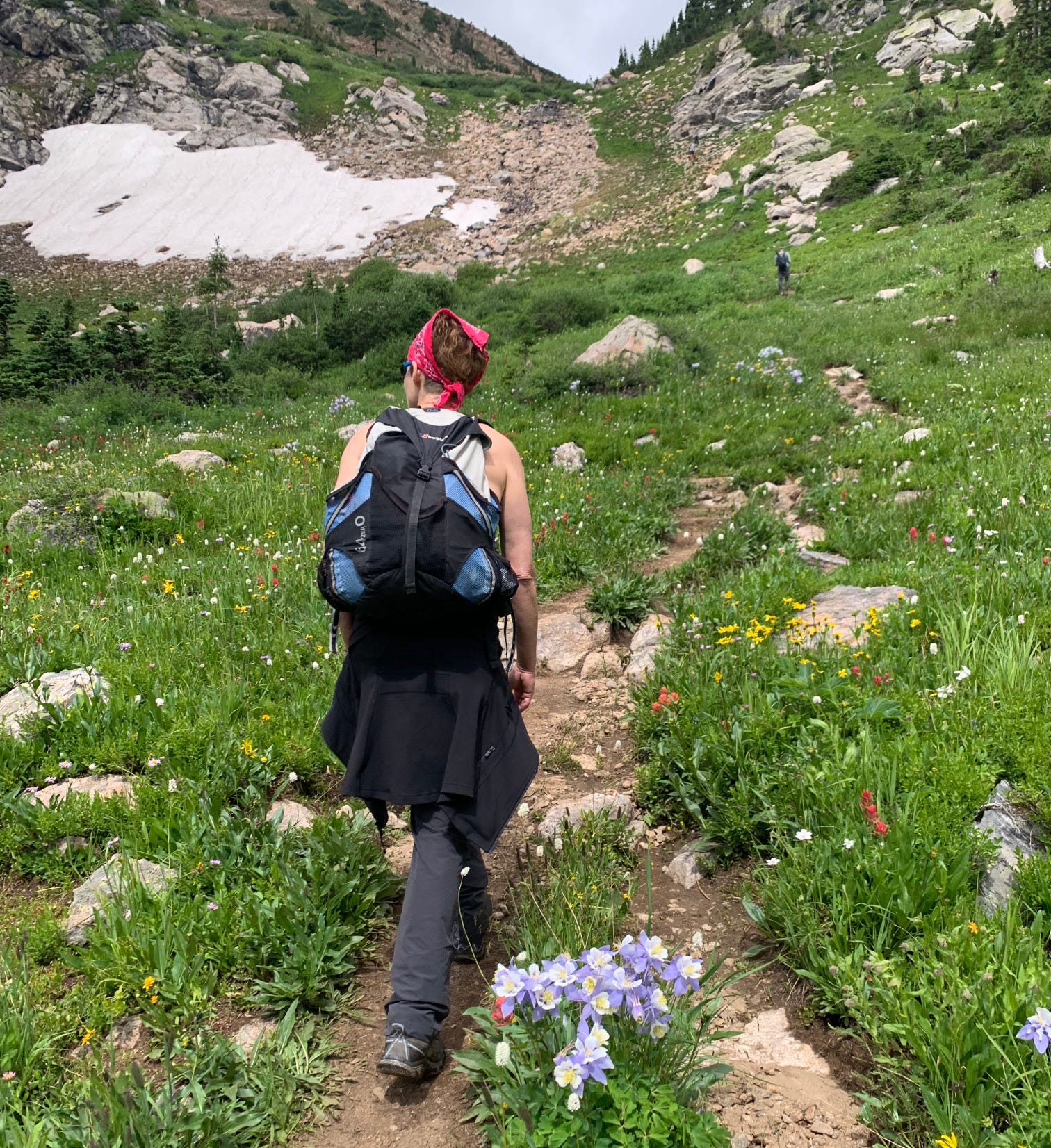
This is the Kingdom of Ling; but also the Kingdom of Ling is about 25 miles west of where we live, in the Rocky Mountains. Charlie and Steph have both been to that particular place in Ling, which is “replete with iris and columbine.” It’s at about 11,000 feet. It is spectacularly beautiful. And there is a stream that flows through it. The path that I’ve taken with Charlie and Steph, the stream that flows through there eventually works its way down through a series of spectacular canyons, drops about 6,000 feet onto the plane. The last canyon is called El Dorado Canyon, which is unbelievable. It’s got sort of 2000 foot walls. And, there’s a Scotsman who fell in love with an American, and married her and moved to Boulder, Colorado, which is where this stream eventually flows through, on its way out to the Mississippi River. He was trained as a distiller, and on moving to the US needed to find some kind of employment; and founded a distillery, making a Colorado version of Scotch whiskey. And this distillery has won all kinds of awards for best American whiskey. People who do whiskey think that the water is very important. That’s what gives the whiskey its character. So the water for that whiskey comes from El Dorado Canyon, which is where this stream that comes down through the Kingdom of Ling, replete with iris and columbine, which we visited.
So this whiskey is actually Ling whiskey, because things are other things! And we will be, in the wang, making ritual use of amrita. Amrita is the drink of the gods in Indian mythology, and that is understood as alcohol in tantra. We will be making use of amrita from Ling.
Charlie: Did you bring some?

David: Yes.
Charlie: Good!
We are always in Ling, Gesar’s kingdom [19:46]
David: Uh, “Ling.” “Ling” is interesting because “ling” is simply the Tibetan word for “a place.” Ling is in Kham, which is the area that is at the border between China and Tibet, and for a long time was claimed by both China and Tibet as being part of them. Um, and the people who lived in Kham were like, “No, we’re independent of both of you, go away.” But the word “kham,” which refers to this particular area, simply means “region” in Tibetan.
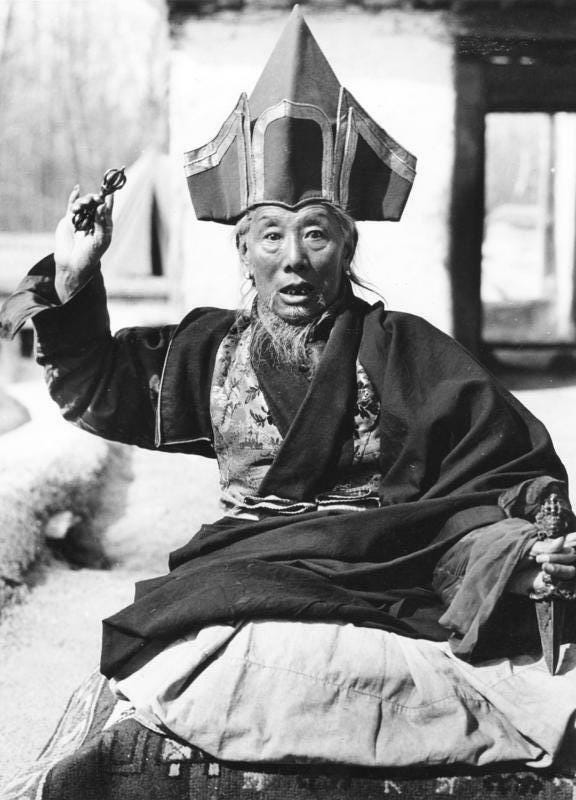
So Ling is a kingdom in Kham, which means it is “a place in the region.” So Lingtsang Gyalpo, I have explained to you, was the last king of Ling. He was the last king of a kingdom called Ling. But it just means “place.” He was the king of a place in some region. And very often Gesar is referred to as “Ling Gesar.” He is the Caesar of some place: Ling. And it’s actually historically unclear whether he existed, but if he did exist: like, which place is it that he was the Caesar of? It might have been Lingtsang; the people who live in Lingtsang want to claim that it was there, but it’s not clear.
So in some sense we are always in Ling. Wherever we are, that’s Ling. So you take Gesar with you, and you take Ling with you.
Emily: Is “Gesar” actually cognate with “Caesar,” or is that a coincidence?
David: It’s believed by Western scholars to be cognate. As the Roman Empire expanded, the satraps and peripheral kingdoms… as the Empire collapsed, they declared themselves to be “Caesar.” So the Kaiser of Germany, that’s Caesar; and the Tsar of Russia, that’s Caesar; and the Gesar of Ling, that’s the Caesar too. In what are now the –Stans were Buddhist kingdoms, at one time; and the rulers there called themselves “Caesar.” And they had a lot of cultural exchange with Tibet, until they were taken over by Muslims.
Block quotes are from the sadhana text Good King Gesar.


.JPG)
_-_14780938092.jpg)