


Health agencies proclaimed that covid was not airborne. That was false.
As a result, their action prescriptions were wrong.
By some estimates, that cost hundreds of thousands of lives.
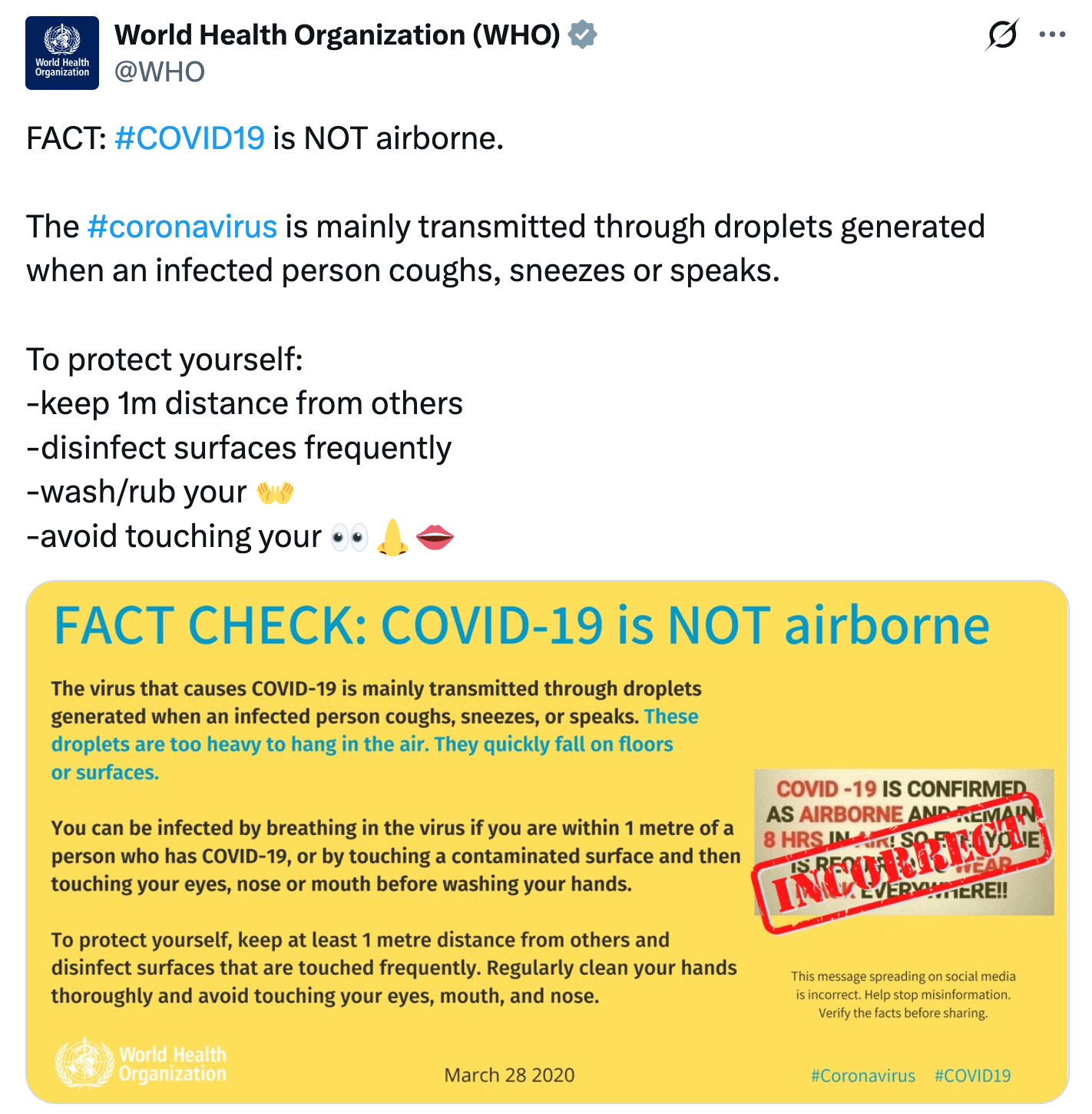
This was not a straightforward scientific error. It was bad meta-rational judgements: about what sorts of evidence should count, what sorts of reasoning were permissible, and when considerations of purpose should override scientific rationality.
From the beginning, many scientists pointed out the agencies’ mistakes. “Team Airborne” got the key scientific conclusions and policy implications right, by means of meta-rational excellence. Over a year and a half, they forced the agencies to accept airborne covid transmission, and to change government policies accordingly.
This post provides case studies in meta-rational failure and success.
Failure: We’ll look in detail at how and why the agencies got covid transmission wrong. This illustrates patterns of mistaken thinking that are common when technical rationality is required but insufficient.
Success: This is also the story of how Team Airborne’s meta-rationality overcame institutional obstinacy and corrected the agencies’ mistakes.
Their activities illustrate:
The fundamental norm of meta-rationality
All twelve of the meta-rational practices
Fluid competence (“meta-rational sorcery”)
Several of the meta-rational maxims
Many people say the the public health agencies’ screwups prove the Bad Tribe is malicious and wrong about everything. This post is not about such politics. It explains what it means to do meta-rationality badly or well.
However, a follow-on post discusses ethical issues in public policy from a meta-rational point of view, using the covid crisis as a source of examples.
Reasoning may seem a dry and abstract topic. The case studies here are also human tales: of heroism and tragedy, genius and idiocy—sometimes embodied in the same person. Some individual towering figures of public health science both saved millions of lives by getting something right, and killed millions of people by getting something else wrong.
Three heroes, with fatal meta-rational misjudgments
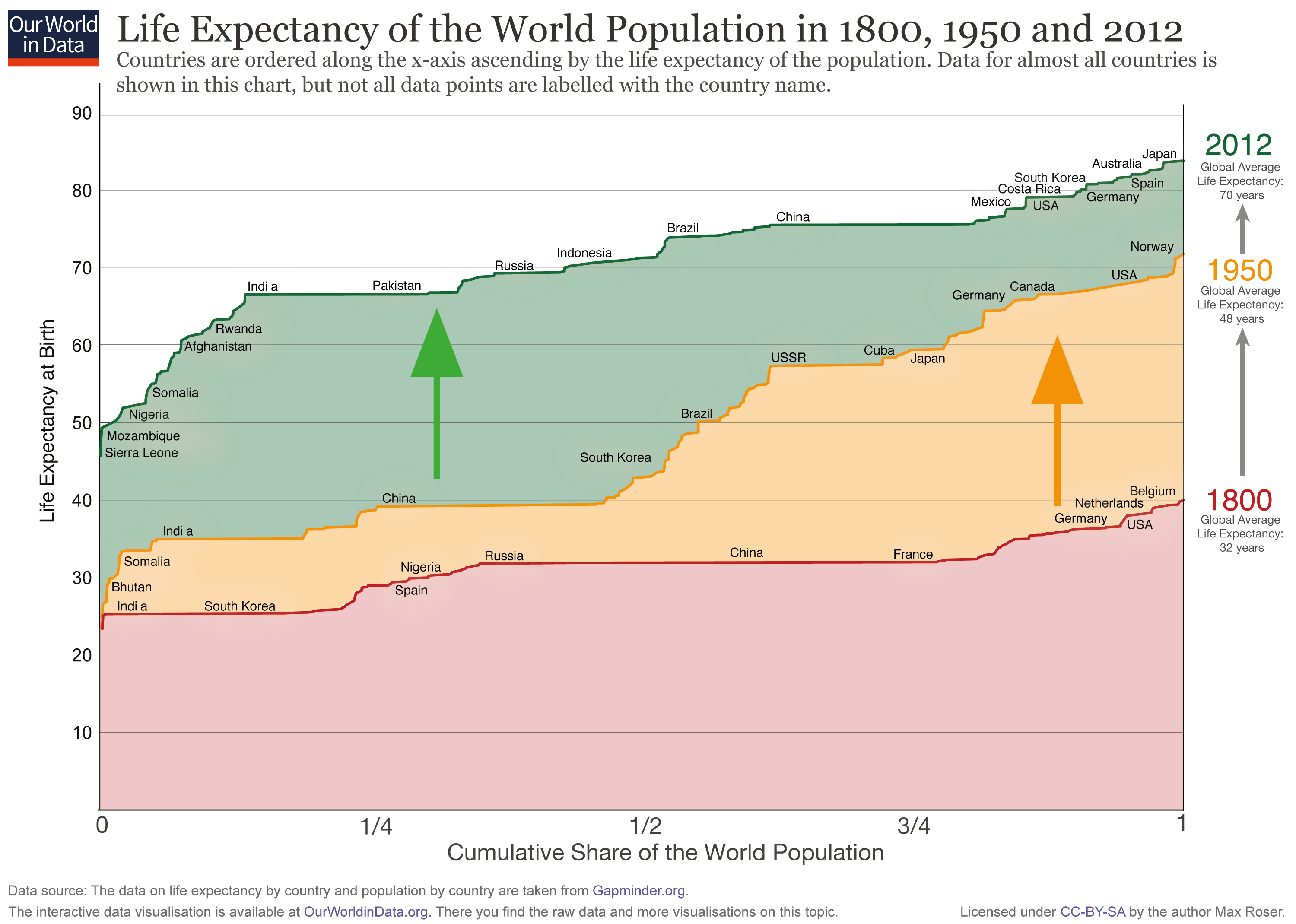
Public health agencies matter because health matters. In the mid-1800s, infectious diseases—particularly smallpox, tuberculosis, and cholera—accounted for about half of all deaths. The doubling of lifespan over two centuries has been almost entirely due to public health interventions against them: sanitation, vaccination, and malnutrition prevention.1 Medical treatments only began to contribute, somewhat, around 1950, with the development of penicillin.
You have erased from the calendar of human afflictions one of its greatest. Future nations will know by history only that the loathsome smallpox has existed, and by you has been extirpated.
—Thomas Jefferson, to Edward Jenner, who developed the vaccine in 1796
In the covid crisis, many of the public health agencies’ errors stemmed from dogmatic insistence on a wrong causal theory of infectious disease: the spray theory. That was formulated a century earlier, and disproven starting in 1962. To understand why authorities were still so stuck in it in 2020, we need first to understand where the theory came from, and what made it seem certain despite contrary evidence.
This post presents case studies in theory replacement. Thomas Kuhn called those “paradigm shifts” or “scientific revolutions.” A scientific revolution is necessarily meta-rational. The old theory was rational in its own terms, so it could not be disconfirmed from within its own framework. Weighing a new theory versus the generally-accepted one has to be meta to both of them.